Wednesday, September 8, 2021

What I learn


heritage in chinese civilisation


2.1  Chinese culture/tradition comprises

1. Rituals/customs in Chinese culture, e.g.
a. Spring festival – reunion, time for family to get together to eat; celebration – when people are free in winter, land cannot be worked on
b. Qing Ming
i. Respect for and appreciation of ancestors
ii. Philosophy of death
iii. Know how to live
Know where we come from
Know where we are
Know where we are going to
iv. Like a kite – a celebration, a release

2. Values
i. Filial piety
ii. Ancestor respect
iii. Austerity

3. Symbols such as 
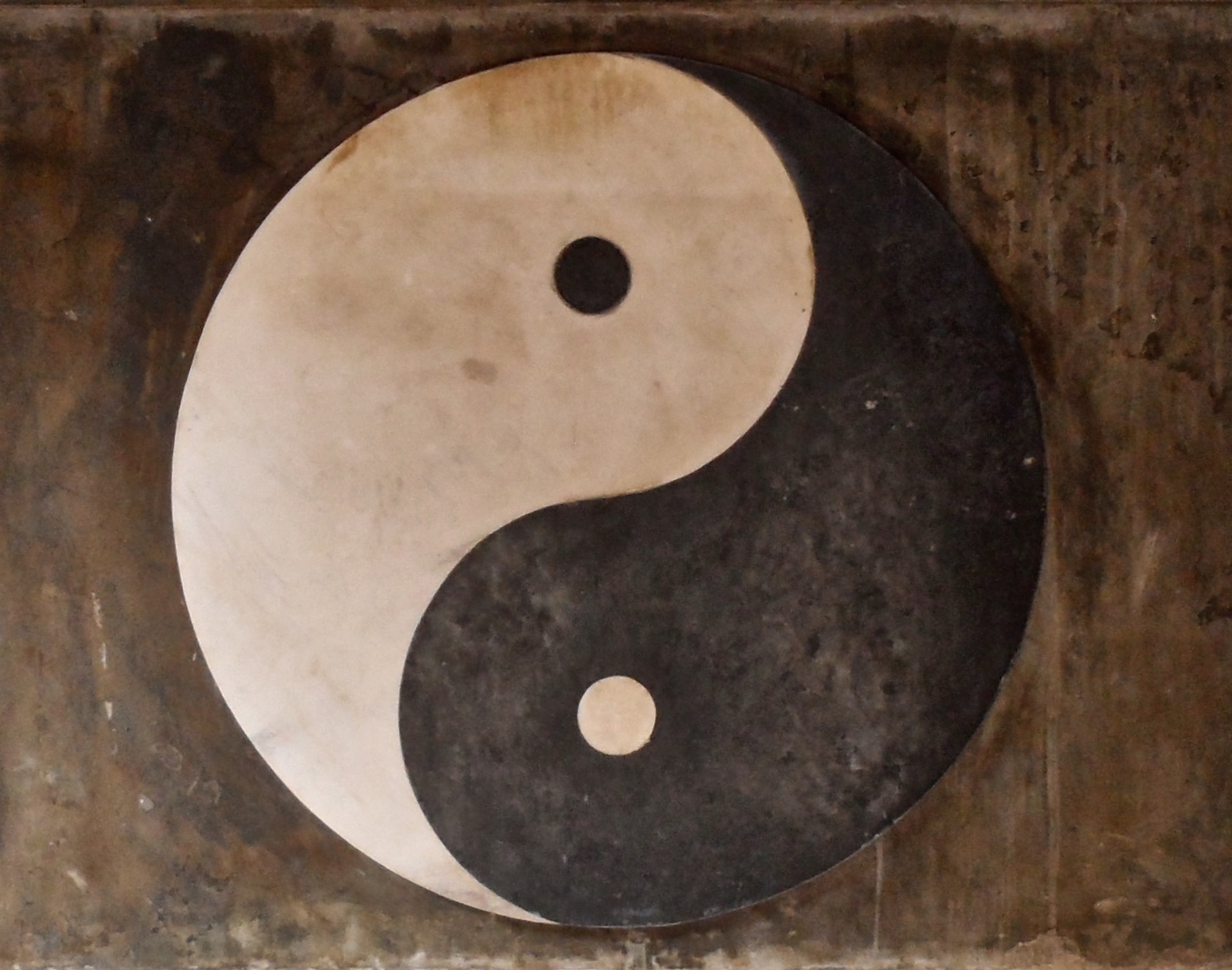
i. Yin Yang
ii. Images
iii. Colours
iv. Architecture

4. Main doctrines in Chinese culture – based on three modes/manifested by :
i. Personality – dao or doctrine of gentleman (vs mean person, xiao ren)
ii. Thinking – mean (i.e. oppose all extremism)
iii. Behavioral – etiquette – family ethics

5. Elements in Chinese culture, e.g.
dance reflects 
- circle feature
- reaching towards earth (angled in earth)

6. Integration and assimilation
- what/how much to absorb; what/how much to let go, if at all;
- crossing the divide – communication

7. Upholding cultural practice need not be expensive, e.g. tea drinking practice – need not require one to be well-educated, rich

8. Stories/values to guide (vs others with religion)

9. Everyone has duties, occupation and possesions, e.g. the monk and his bundle of possession/duties vs the official and his documents/responsibilities

10. Sometimes it's better to be wise than to be right.


* Heritage in brief, for contemplation


Monday, September 6, 2021

What I learn

heritage in chinese civilisation

2.0 How to Cultivate Oneself

1. Four virtues to cultivate
i. Trustworthiness – true, loyal, sincere
ii. Sense of shame
iii. Integrity
iv. Gratitude – to parents; even to those you can help

Man is different from animal because of culture.
Man is given the greatest freedom, also the greatest restraint

2. Teachings
i. Confucianism – have the courage to do things (duties, responsibilities)
ii. Buddhism – life is fleeting; know when to let go – do not hold on to past; do not long for future; live in the present
iii. Daosim – know how to view the world (there is contentment)

3. Emphasis on contentment and self-sufficiency.

4. Go with the natural, i.e. the natural = innateness of things, i.e. what you are, not how you should be when compared to others, e.g. if others eat two bowls of rice, you eat one, do not try to eat two.
Stay within your own limits, i.e. not eat or wear more than what you are in size – stomach, body measurement

5. Propriety = respect
Cultivating self is a gradual process – learn things to benefit self, not for trade, etc.


* Heritage in brief, for contemplation.


Flit, flirt, love


Flit, flirt, love


Live, leave, love


Saturday, September 4, 2021

Seasons of life


Seasons of life
Taking and giving
Celebration is not an illusion.


Thursday, September 2, 2021

What I learn


wisdom in traditional chinese medicine

29. TCM (how the Yellow Emperor’s Canon of Medicine (Huang Di Nei Jing Su Wen) uses the Tao Te Ching and Yi Jing)

1. (*Chinese characters which share the same pronunciation have the same origin)
‘One’ in the Origin of Chinese characters was a dot (circle); it refers to Taiji (a state of Yin and Yang in complete harmonious relationship).
The TTC relates the origin of human – 
Tao engenders one
One engenders two
Two engenders three
Three engenders everything
This is the syncretism between heaven and man.
Before the formation of the universe, there was Tao, there was obscure but physical existence.  Tao engenders One which is Taiji, then One forms Two – Two is Qing Yang which is in the heaven, and Zhou Yin which is in the earth.
When Yang increases heaven is formed, when Yin declines earth is formed, so heaven and earth became Two, then as One engenders Two, Two engenders Three, earth Qi constantly rises while heaven Qi declines, the state of Qi with motions of heaven and earth was formed, this is Three, i.e. when all creatures on earth were produced.
What is the essence of man?  According to TCM, in the TTC, human is everything, the most perfect product of Yin and Yang.  The essence is that Yin and Yang must be balanced (core philosophy of TCM).

2. In the Chinese culture, an important idea is that man is the lord of creation – 
Man follows Earth,
Earth follows Heaven, 
Heaven follows Tao, 
Tao follows Nature – 
Why is this said?
Man has the capacity to put heaven and earth together – look at the philtrum.  When a person is in the womb, it is called the “nine obstructed orifices” – the navel is connected with the mother.  All other orifices are closed.  When the baby is born, the “nine orifices” open.  The orifice is the channel between independent life and the nature.  The channel is open.  How are the nine orifices distributed –
Above the philtrum: three even numbers
Two eyes
Two ears
Two nostrils
Below the philtrum: three odd numbers
One mouth
One external genitalia
One anus
Three even numbers = Kun trigram, which means earth
Three odd numbers = Chien trigram, which is heaven
However, originally heaven is above and earth is below, but how can man follow heaven and earth?
Earth Qi must rise and heaven Qi must decline.  At this point, man is alive.
When the nine orifices are distributed, earth Qi rises so above is even number, heaven Qi declines, so below is odd number, therefore, the philtrum is where Yin and Yang meet.
When man is born, he follows heaven and earth.  When earth Qi rises, heaven Qi declines, then man is alive.
When you faint, earth Qi no longer rises, heaven Qi no longer declines, so pinch the philtrum so that heaven and earth Qi can start to run again.

3. Tai hexagram (Tai kua) in the Yi Jing is where heaven and earth meet, this is the relationship between TCM and the Yi Jing.  Yi in Yi Jing is represented by the sun and moon pictograph.  The sun and moon are forever changing, moving all the time.  Therefore, the Yi represents motions and changes in nature, Yin and Yang.  In TCM, what regular rules Yin and Yang, have in the process of a man’s growth?

Yi Jing (also known as Zhou Yi) has three basic meanings –
1. Variation – always changing

2. Simple (jian yi), i.e. all movements in nature are inseparable like the changes of sun and moon, and the sun and moon represent Yin and Yang.  Therefore, TCM says that the essentials of all changes shall be known.  TCM states that understanding the Yin and Yang will understand all the change rules in the world.  It uses the changes of Yin and Yang in nature to understand the change rules in the world.

3. Hard (bu yi).  Between heaven and earth, Qi is moving and changing – it has fixed and regular rule but it is not like this on the first day.

In summary, the Yi Jing has three meanings – change and variation, simple yi and hard yi. 
(*yi as in yi of Yi Jing)


* Sharing a nugget of vitality, not to be swallowed whole.


Monday, August 30, 2021

What I learn


wisdom in traditonal chinese medicine


28. Secret of Yang Qi

1. Yang Qi refers to life activities of human bodies such as prompt thinking, brisk movement, which are external manifestations of Yang Qi.

2. Yin Qi goes hand in hand with the production of blood, semen and other body fluids.

3. Yang Qi supports life activities, and Yin Qi forms tangible matters of the body tissues and fluids.

4. Abide by the principles of nature; according to Lao Tzu,
Man models on Earth
Earth models on Heaven
Heaven models on the Way
The Way models on Nature

Yang Qi is from heaven and the sun; Yin qi is from earth and the moon – work during the day, rest during the night.
Yang Qi is at the external body during the day, it returns to the body at night – Yang Qi is needed to maintain Yin Qi at night – both Yang and Yin Qi must be in the body to enable body to keep well – if you exercise at night, Yang Qi cannot return into the body.

5. To look after Yang Qi, women should look after the spleen, stomach and blood while men should look after the kidneys and semen.

6. Hot-natured food promotes Yang Qi, cold natured food suppresses Yang Qi, e.g. 
i. watermelon is red and sweet, is cold natured – red is related to heart which is of hot nature, i.e. red things go to the heart, thus, watermelon reduces heat in heart as one will pee after eating watermelon.
ii. lichee is hot, sweet, gentle; if weak spleen and stomach, can eat lichee because can promote Yang Qi; but not for hot-natured person, it can cause inflammation, so boil lichee peel in water and drink because peel is cold-natured.
iii. fresh ginger is gentle; yellow goes to the spleen and stomach.
iv. pepper/chilli is hot-natured and promotes Yang Qi better.
v. old duck is hot-natured; young duck is cold-natured.
vi. American ginseng replenishes Yang Qi fluids, is best eaten in summer.
vii. Nuts, peanuts, chestnuts, hazels, are seeds, so are good vegetable protein – seeds have vitality, carrier of vitality – promotes kidney Qi.
viii. “Each place has streams come in from all over the country”, i.e. follow own local practices and customs to keep well.

7. In TCM, foods of specific nature are medicines such as watermelon, ginger, pepper.

8. Medicine is less effective than food.  Extractive medicine or chemosynthetic medicine – avoid artificial/chemosynthetic medicine as a specific function of the medicine is exaggerated.

9. In spring and summer look after Yang Qi; in autumn and winter, look after Yin Qi.

10. Negative emotions affect Qi, e.g. rage causes Qi to rise; anxiety causes Qi to depress.
Overthinking/overworking affects Yang Qi, the spleen – deficient Yang Qi causes loss of appetite, abdominal pain, diarrhoea.
Diabetes, depression also affects Yang Qi.

11. Yang Qi must transform and transmit in body; there should not be Qi stasis or this will lead to internal heat.

12. The Yin-Yang Fish in the Eight Trigrams/Baqua is reflective of the origins of the universe – according to Sun Simiao, if man does not understand the laws of the universe, he does not understand the principles of life; it’s about the relation between macro Yin-Yang and micro Yin-Yang.


* Sharing a nugget of vitality, not to be swallowed whole.


Tuesday, August 24, 2021

What I learn


wisdom in traditional chinese medicine


27.  Food in Ancient Chinese Culture

1. Bitter gourd = insulin

2. Garlic = antibiotics 

3. Peanuts with skin = red blood cells

4. Day lily = feel good feeling

5. Rice is important, rice is in Qi character; vegetable is important, it is in Jing character as field is in Shen character.

6. Based on number of teeth, i.e. 4 canines and 32 molars, it suggests that 1/8th meat in diet is enough.

7. Millet = ‘miyou’ which is better than milk

8. Sweet potato prevents obstruction in intestines, i.e. clean intestinal tract = longevity. Also, has cholesterol lowering ability, 10 times more than 130 other foods.

9. Vegetables must be fresh, green, yellow, red.  Must be bought fresh, not stored for days in fridge; green for chlorophyll and folic acid, yellow for carotene, red for lycopene.  Vegetable contain the character Shu which means grass and dredging, suggests able to open meridiens and clean obstruction.

10. Fruits cannot replace vegetables – eat less fruits but more times. 
Fruits can be classified as normal, hot or cold, e.g. banana (cold) puts one in good mood – has good adjustment effect; apple (normal) prevents dementia; persimmon (hot) must not be eaten with crab (hot).

11. Cooked with low heat.
Good to cook with slow fire, e.g. mantou is better than bread, both made from wheat but mantou is steamed.

12. Eat carbohydrates to burn fats.

13. Grain eater said to have wisdom and thinking ability; grazer to be stupid and labored; meat eater to be bold and hot tempered.  Too much meat increases abdominal heat, makes a person want to drink ice water.

14. Ice water is bad for abdominal brain, makes a person easily rejects others.

15. Abdominal brain = EQ; head brain = IQ

16. Functional food = target organ (food as medicine), e.g. walnut for brain; almond for heart; fish head soup nourishes brain.

17. Balance is health, adjustment is treatment.


*Sharing a nugget of vitality, not to be swallowed whole.